When handling long, heavy or bulky loads, traditional forklifts aren’t always the most practical solution. Narrow aisles, restricted warehouse space and awkwardly shaped loads can make everyday materials handling more challenging than it needs to be.
Introducing multidirectional forklifts. As the name suggests, they are designed to move in multiple directions, but without the need for wide turning spaces. They’re a specialist forklift that offer greater flexibility, improved manoeuvrability and more efficient handling of difficult loads.
But what exactly is a multidirectional forklift, how does it work and could it be the right solution for your business?
What Is a Multidirectional Forklift?
Unlike conventional forklifts,multidirectional forklifts use advanced steering systems to change direction with minimal repositioning.
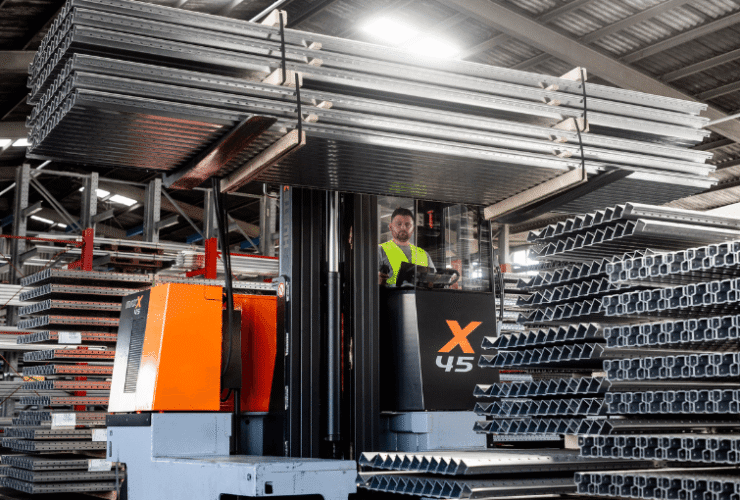
This makes them particularly effective for transporting long or oversized materials, such as timber, steel beams, pipes and sheet materials, through narrow aisles and confined working environments.
By allowing operators to travel sideways with a load, multidirectional forklifts can significantly reduce the space required to transport materials safely and efficiently.
How Does a Multidirectional Forklift Work?
The main difference between a multidirectional forklift and a conventional forklift lies in its steering system.
Traditional forklifts rely on conventional steering arrangements to manoeuvre around corners and change direction. Multidirectional forklifts feature specially designed wheel and steering systems that allow the vehicle to travel in several directions.
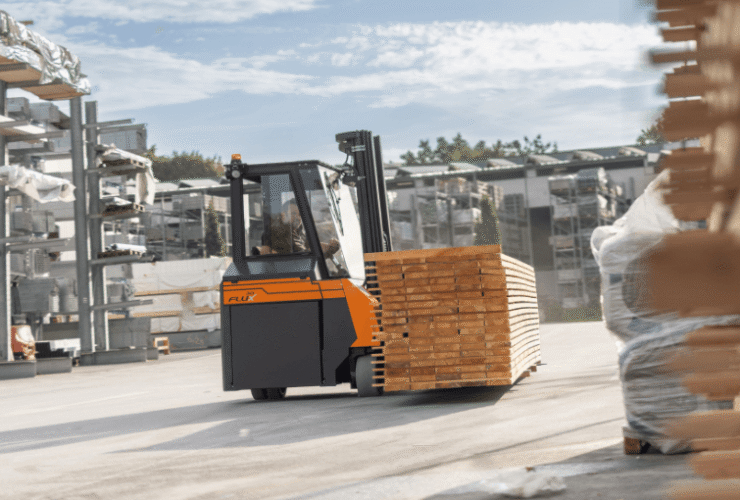
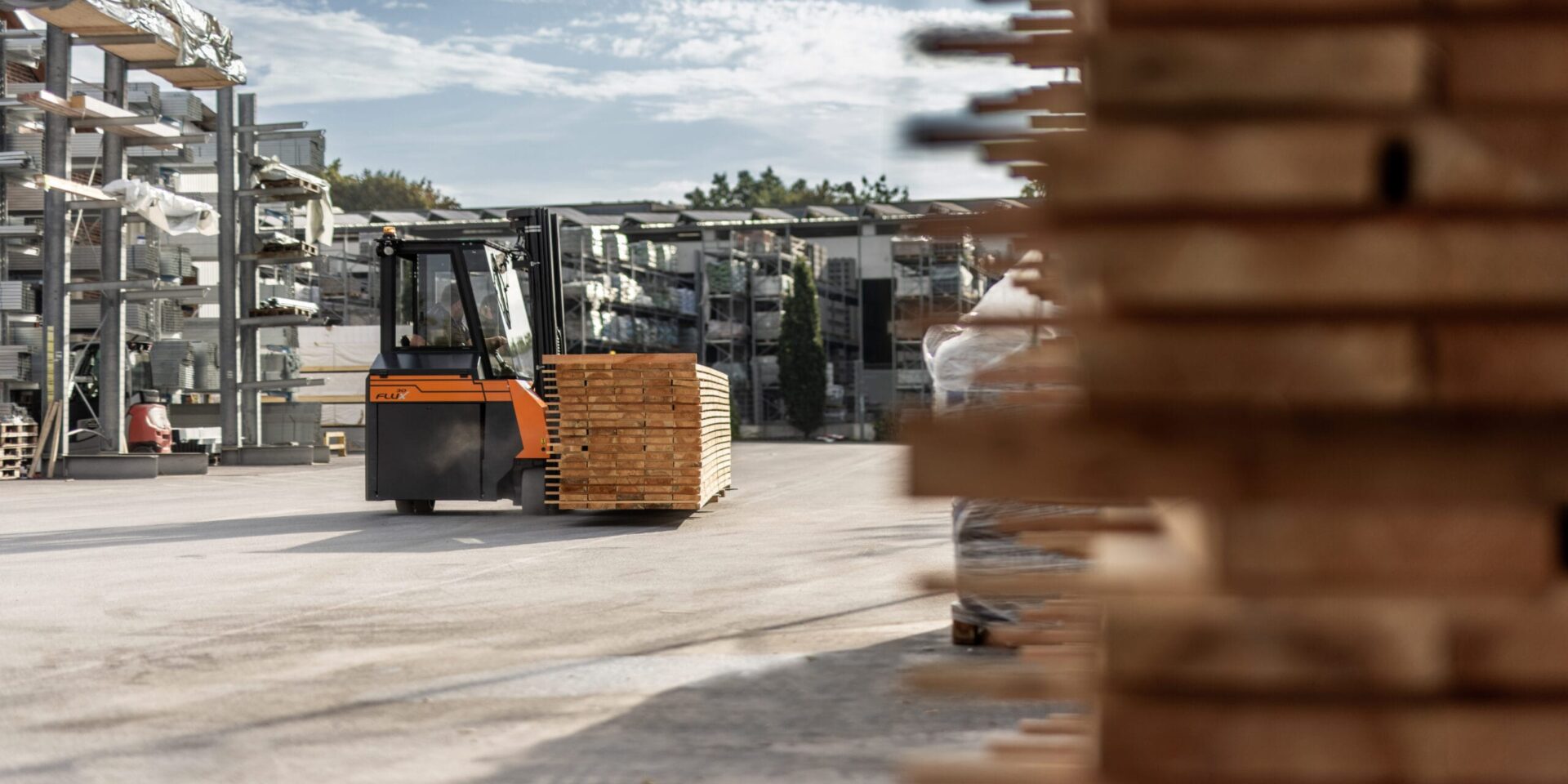
For example, when carrying a long bundle of timber through a narrow warehouse aisle, the forklift can travel sideways, keeping the load aligned with the direction of movement rather than requiring a wide turning area.
Our HUBTEX FluX features an innovative 360° HX steering system steering technology that enables seamless transitions between longitudinal and transverse travel, without stopping. This flexibility makes multidirectional forklifts particularly valuable in busy warehouses, manufacturing facilities and storage yards where space is limited.
What Are the Benefits of a Multidirectional Forklift?
1. Improved Manoeuvrability in Narrow Aisles
One of the biggest advantages of a multidirectional forklift is its ability to operate in restricted spaces.
By travelling sideways, operators can move long loads through narrow aisles without the need for large turning circles. This helps businesses make better use of their available warehouse space while maintaining efficient materials handling operations.
2. Increased Warehouse Storage Capacity
Traditional forklifts often require wider aisles to accommodate turning and manoeuvring, particularly when handling long materials.
Multidirectional forklifts can operate in narrower aisle configurations, allowing businesses to reconsider their warehouse layout and increase warehouse capacity by up to 100%.
3. Safer Handling of Long and Bulky Loads
Transporting oversized materials using a conventional forklift can present additional challenges, particularly when loads extend beyond the width of the vehicle.
Multidirectional forklifts are specifically designed for these applications, allowing long loads to be transported in a safer, more controlled way.
Their specialist steering systems and load-handling configurations can help operators navigate confined areas more precisely, reducing unnecessary manoeuvring and the potential for product damage.
4. Greater Operational Efficiency
Time spent repositioning a forklift, navigating tight corners or making repeated manoeuvres can quickly add up throughout a working day.
Multidirectional forklifts simplify these movements by allowing operators to change travel direction more efficiently.
This can help reduce handling times, streamline warehouse operations and improve productivity, particularly in facilities where long materials are moved frequently.
5. Versatility Across Different Applications
Multidirectional forklifts aren’t limited to one type of environment or material. Depending on the model and configuration, they can be used indoors, outdoors and across a wide range of industrial applications.
Some models also combine conventional front-loading capabilities with sideways travel, making them suitable for businesses that handle both standard pallets and longer materials.
Discover HUBTEX Multidirectional Forklifts
At HUBTEX Australia, we specialise in materials handling solutions designed for transporting long, heavy and bulky loads in challenging environments.
Our multidirectional forklifts are designed to improve manoeuvrability, maximise storage space and support efficient materials handling operations.
With extensive experience supporting Australian businesses across the timber, steel, manufacturing and warehousing sectors, our team can help you identify the right equipment for your specific requirements.
Looking for a more efficient way to handle long or bulky materials? Discuss your requirements with the HUBTEX team today.
Frequently Asked Questions
Long-term forklift hire typically refers to a rental agreement over several years, with the most common terms being 5 or 7 years. This option is ideal for businesses that require reliable materials handling equipment on an ongoing basis without the upfront cost and long-term commitment of purchasing a forklift outright. A long-term rental agreement can also make equipment costs more predictable, helping businesses plan their operational expenses while ensuring they have access to equipment suited to their application.
Yes. Maintenance is included with our long-term forklift rental agreements, helping to keep your equipment operating reliably and efficiently throughout the rental period. Regular servicing and preventative maintenance can reduce the risk of unexpected breakdowns, improve equipment uptime and help ensure your forklift continues to perform safely. HUBTEX Australia also provides specialist service support from trained technicians, giving you the confidence that your equipment is supported for the duration of your rental.
Choosing the right forklift depends on several factors, including the type, size and weight of the loads you handle, your available aisle widths, lift heights, operating environment and storage layout. Our experienced sales team can visit your site for a consultation, assess your materials handling requirements and recommend the most suitable equipment for your operation. We can also help you identify opportunities to improve your storage capacity and workflow through our Warehouse Design and Layout services.